
Many Cellbreaker customers have expressed hesitations about switching from one of the larger, well-known carriers to a smaller, often cheaper one. This is the first post of a series that aims to address myths and preconceived notions associated with cell phone companies, especially those that aren’t “the Big 4” (AT&T, Sprint, T-Mobile and Verizon).
How is your cellular service? Are you happy with the range that you receive? More importantly, are you happy with the price that you are paying for it? Often, cell phone shoppers go with the companies they know or what is most readily available. There are, however, many companies that offer the same service or a better overall experience for a fraction of the cost. Let’s address one of the biggest myths that limits a cell phone buyer’s options: worries about cell service.
Most cell phone towers in the United States are owned by one of the “Big 4.” Smaller companies pay for the use of the towers in order to supply their services. A cellular provider that rides another network is known as a mobile virtual network operator or MVNO. This process allows MVNOs much greater access than they would most likely achieve on their own and the larger providers extra revenue. Each big carrier does this with at least one smaller company. Sprint, for example, allows many well-known MVNOs access to its network. Below is a chart that shows a few MVNOs and the greater network they use.
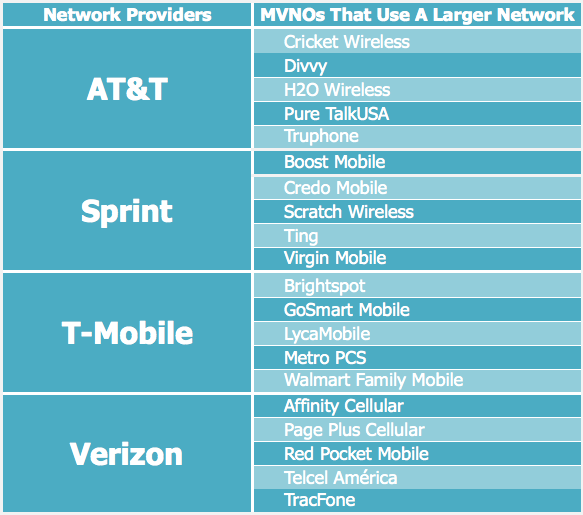
But how is the service? There are a number of factors that can influence service, like device and location, but according to the MVNOs the coverage and signal that is leveraged is identical to that of the larger company’s, who own the towers.
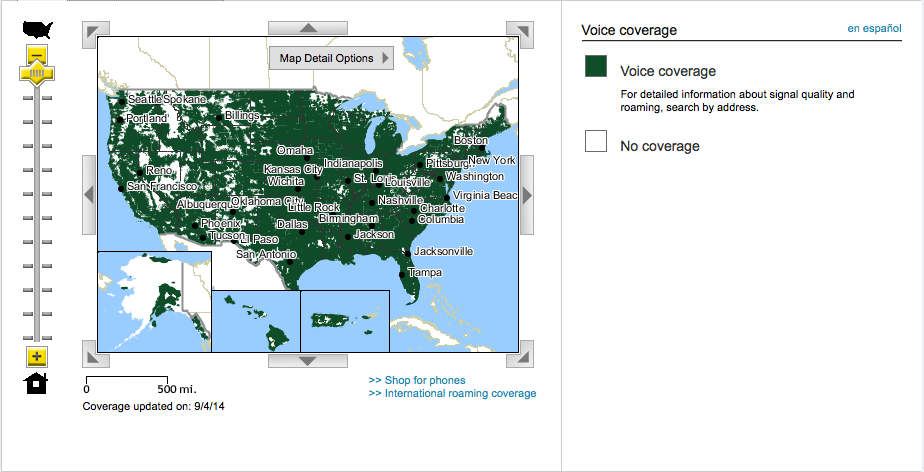
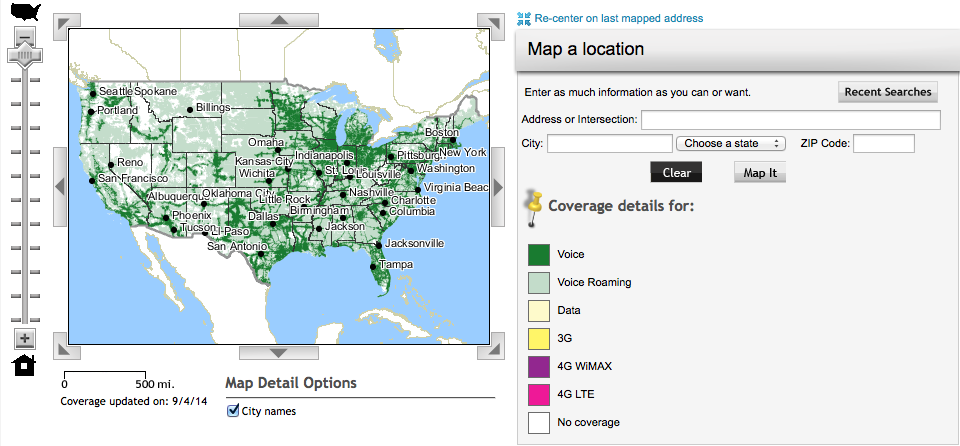
These maps here were gathered from Sprint and Ting, respectively. Remember, Ting uses Sprint’s network to provide service. Both maps are identical in coverage and gaps. The difference resides in that Ting breaks coverage into different categories, such as “Voice” and “Voice Roaming.” Sprint’s map clumps them all together as “Voice coverage.”
You should always research the service that is available in your area. Utilize this third party map to view many different companies and the range they provide.
So when you are shopping for cellular service, consider many different options. All coverage is not equal, so consider what network a provider is using and, of course, compare prices.